
Deadline for applications: 21 March 2022.
Deadline for applications: 21 March 2022.
Often you only need to hear a few seconds of music, to recognize a song. There's a good chance it was a very catchy tune. Computational musicologist Ashley Burgoyne (Music Cognition Group, University of Amsterdam) reveals what makes a song catchy.
Burgoyne, J. A., Bountouridis, D., Balen, J. van, &
Honing, H. (2013). Hooked: A Game For Discovering What Makes Music Catchy. In
A. De Souza Britto, F. Gouyon, & S. Dixon (Eds.), Proceedings of the
International Society for Music Information Retrieval Conference (pp.
245–250). Curitiba, Brazil. [pdf]
"Sta je eindelijk weer eens met je partner op de dansvloer, gaat hij nog voor het einde van het eerste nummer op je tenen staan. Hij voelt zich schuldig en jij bent teleurgesteld, want jij wil ook weleens romantisch over de dansvloer zwieren. Maar waarom kan jouw partner dat niet? Heeft-ie een slecht ritmegevoel?"
In deze Universiteit van Amsterdam lezing geeft cognitief neurowetenschapper Fleur Bouwer (Universiteit van Amsterdam, Music Cognition Goup Associate) antwoord op die vraag.
Bouwer, F.L., Honing, H., & Slagter, H. A. (2020) Beat-based and memory-based temporal expectations in rhythm: similar perceptual effects, different underlying mechanisms. Journal of Cognitive Neuroscience, 32(7), 1221-1241. doi: 10.1162/jocn_a_01529
Honing, H., & Bouwer, F. L. (2019). Rhythm. In Rentfrow, P.J., & Levitin, D. (ed.), Foundations in Music Psychology: Theory and Research. Cambridge, Mass.: The MIT Press. ISBN 9780262039277.
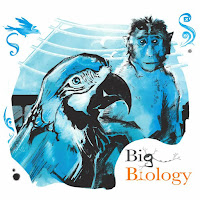
In this episode of Big Biology, entitled Beasty Beats: The Origins of Musicality, Art Woods and Marty Martin talk with Henkjan Honing about the biology of musicality:
"He started as a musician but eventually found his way to the science of music. Among diverse species, he and his collaborators now study how and why some animals perceive elements of music but others do not. We also discuss the earliest known examples of human musical instruments and the possible adaptive value of music."
Apple podcast here | Spotify podcast here | Stitcher podcast here.
Below a recording of a recent, one hour+ edition of BètaBreak –made by Frank Gelens, Rianne Verhaegh, and hosted by Spui25– about what musicality entails, what its
biological underpinnings in the brain are, and why we all have musical
abilities.
"The ability to perceive rhythm, tones and beats, key components of musicality, seems to be universal across humans and manifests itself already from a young age; something that this edition’s guest endorses (Honing, 2018). Is there an underlying mechanism in our brain that makes this possible? Could our preferences in music have a biological explanation? Furthermore, is musicality also present in other species or is it a human trait?"
Honing, H. (2018). On the biological basis of musicality. Annals of the New York Academy of Sciences (The Neurosciences and Music VI: Music, Sound and Health). doi: 10.1111/nyas.13638.
For another episode of BètaBreak/Spui25 with Frans de Waal on the topic of beauty, see here (with snippets on music/ality too).

De podcast werd gemaakt door Mirjam van Hengel en Frans van Deursen.

More information on how to apply for the position (3 years, 0.5 fte) can be found here.
Deadline for applications is 15 February 2022.

MCG heeft dit jaar een prijs van de KNAW ontvangen om een kennis- en luisterspel te ontwikkelen met als doel te laten zien dat luisteraars muzikaler zijn dan dat ze zelf denken. Dit onder de titel Iedereen is muzikaal: Wat muziekcognitieonderzoek kan zeggen over de alledaagse luisteraar.
Doel van dit project is het bijeenbrengen van bestaande luistertestjes en demonstraties uit de verschillende publiekslezingen en media-optredens van MCG.
Op basis hiervan zal een aantrekkelijk en motiverend spel worden ontworpen; een spel dat feedback geeft over je luistertalenten, je voorkeuren en die een relatie legt met de bestaande wetenschappelijke literatuur. Doelgroep is iedereen die van muziek houdt en wil begrijpen hoe onze relatie met muziek in elkaar zit.
Meer weten?
Zie de advertentie, en hoe te solliciteren, op deze link.

This volume explores the active role these functions play in how music makes us feel; exhilarated, soothed, or inspired. Grounded in the latest research in areas of psychology, biology, and cognitive neuroscience, and with clear examples throughout, this book concentrates on underappreciated musical skills such as sense of rhythm, beat induction, and relative pitch, that make people intrinsically musical creatures — supporting the conviction that all humans have a unique, instinctive attraction to music.
"Insights from one of the leading researchers working at the intersection of music, psychology, and computer science."
Dan Levitin, author of This is your brain on music
"A graceful and precise introduction into the intricacy of what ordinary humans manage to learn about music, naturally and automatically, just by listening."
Gary Marcus, author of Guitar Zero
"Honing demonstrates that ordinary listeners, whether children or adults, are a lot more musically savvy than they think they are."
Sandra Trehub, Department of Psychology, University of Toronto

All information on the research project and how to apply can be found here.
Deadline for applications is 1 November 2021.
