Showing posts with label beat induction special. Show all posts

Sunday, December 10, 2023

Why did we decide to revisit and overhaul our earlier beat perception studies?

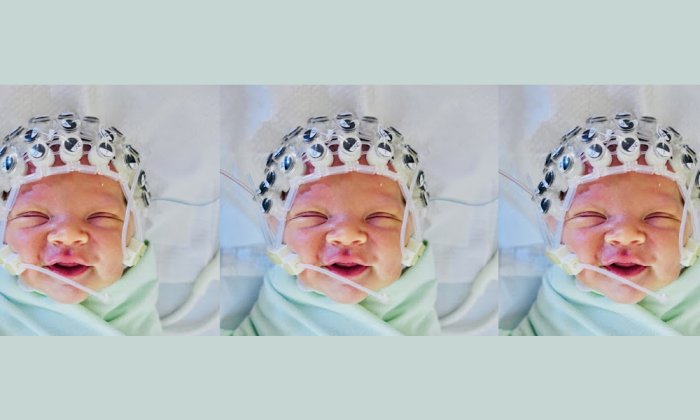
Newborn baby participating in listening experiment
(courtesy Eszter Rozgonyiné Lányi).

[Published in Scientific American and MIT Press Reader]

In 2009, we found that newborns possess the ability to discern a regular pulse – the beat – in music. It’s a skill that might seem trivial to most of us but that’s fundamental to the creation and appreciation of music. The discovery sparked a profound curiosity in me, leading to an exploration of the biological underpinnings of our innate capacity for music, commonly referred to as “musicality.”

In a nutshell, the experiment involved playing drum rhythms, occasionally omitting a beat, and observing the newborns’ responses. Astonishingly, these tiny participants displayed an anticipation of the missing beat, as their brains exhibited a distinct spike, signaling a violation of their expectations when a note was omitted. This discovery not only unveiled the musical prowess of newborns but also helped lay the foundation for a burgeoning field dedicated to studying the origins of musicality.

Yet, as with any discovery, skepticism emerged (as it should). Some colleagues challenged our interpretation of the results, suggesting alternate explanations rooted in the acoustic nature of the stimuli we employed. Others argued that the observed reactions were a result of statistical learning, questioning the validity of beat perception being a separate mechanism essential to our musical capacity. Infants actively engage in statistical learning as they acquire a new language, enabling them to grasp elements such as word order and common accent structures in their native language. Why would music perception be any different?

To address these challenges, in 2015, our group decided to revisit and overhaul our earlier beat perception study, expanding its scope, method and scale, and, once more, decided to include, next to newborns, adults (musicians and non-musicians) and macaque monkeys.

 [...] Continue reading in The MIT Press Reader.

Monday, November 27, 2023

Do babies have a natural affinity for ‘the beat’ ?

Newborn baby participating in listening experiment
(courtesy Eszter Rozgonyiné Lányi).
Today a new study, carried out by a team of scientists from the University of Amsterdam and the HUN-REN Research Centre for Natural Sciences (TTK) in Hungary, shows that the ability to recognize a beat is not simply due to the statistical learning ability of newborns, but that beat perception is actually a separate cognitive mechanism that is already active at birth. The study was published in the scientific journal Cognition.

‘There is still a lot we don't know about how newborn babies perceive, remember and process music,’ says author Henkjan Honing, professor of Music Cognition at the UvA. 'But, in 2009, we found clear indications that babies of just a few days old have the ability to hear a regular pulse in music – the beat – a characteristic that is considered essential for making and appreciating music.’

27 babies
Because the previous research from Honing and his colleagues had so far remained unreplicated and they still had many questions, the UvA and TTK joined forces once again – this time using a new paradigm. In an experiment with 27 newborn babies, researchers manipulated the timing of drum rhythms to see whether babies make a distinction between learning the order of sounds in a drum rhythm (statistical learning) and being able to recognize a beat (beat-induction).

Manipulated timing
The babies were presented with two versions of one drum rhythm through headphones. In the first version, the timing was isochronous: the distance between the sounds was always the same. This allows you to hear a pulse or beat in the rhythm. In the other version, the same drum pattern was presented, but with random timing (jittered). As a result, beat perception was not possible, but the sequence of sounds could be learned. This allowed the researchers to distinguish between beat perception and statistical learning.

Because behavioral responses in newborn babies cannot be observed, the research was done with brain wave measurements (EEG) while the babies were sleeping. This way, the researchers were able to view the brain responses of the babies. These responses showed that the babies heard the beat when the time interval between the beats was always the same. But when the researchers played the same pattern at irregular time intervals, the babies didn't hear a beat.

Not a trivial skill
‘This crucial difference confirms that being able to hear the beat is innate and not simply the result of learned sound sequences,’ said co-author István Winkler, professor at the Institute of Cognitive Neuroscience and Psychology at TTK. 'Our findings suggest that it is a specific skill of newborns and make clear how important baby and nursery rhymes are for the auditory development of young children. More insight into early perception is of great importance for learning more about infant cognition and the role that musical skills may play in early development.'

Honing adds: 'Most people can easily pick up the beat in music and judge whether the music is getting faster or slower – it seems like an inconsequential skill. However, since perceiving regularity in music is what allows us to dance and make music together, it is not a trivial phenomenon. In fact, beat perception can be considered a fundamental human trait that must have played a crucial role in the evolution of our capacity for music.’

Publication details
Gábor P. Háden, Fleur L. Bouwer, Henkjan Honing and István Winkler. Beat processing in newborn infants cannot be explained by statistical learning based on transition probabilities, Cognition, DOI
10.1016/j.cognition.2023.105670.

 [Source UvA Press Office: English version; Dutch version.]

Sunday, September 13, 2020

How different are these hypotheses?

An overview comparison of the Action Simulation for Auditory Prediction Hypothesis (ASAP) and the Gradual Audiomotor Evolution Hypothesis (GAE).  

This week a mini review paper appeared in Frontiers in Human Neuroscience (Proksch et al, 2020), comparing two complementary hypotheses for the neural underpinnings of rhythm perception: The Action Simulation for Auditory Prediction hypothesis (ASAP; Patel and Iversen, 2014) and the Gradual Audiomotor Evolution hypothesis (GAE: Merchant and Honing, 2014), In addition to interpreting work under both hypotheses as converging evidence for the predictive role of the motor system in the perception of rhythm, the paper reviews recent experimental progress supporting each of these hypotheses. 

Honing, H., & Merchant, H. (2014). Differences in auditory timing between human and non-human primates. Behavioral and Brain Sciences, 27(6), 557–558. https://doi.org/10.1017/S0140525X13004056

Proksch, S., Comstock, D. C., Médé, B., Pabst, A., & Balasubramaniam, R. (2020). Motor and Predictive Processes in Auditory Beat and Rhythm Perception. Frontiers in Human Neuroscience, 14. https://doi.org/10.3389/fnhum.2020.578546

Tuesday, December 24, 2019

Empirical support for the GAE hypothesis?

Yesterday PNAS published a study by Yuko Hattori and colleagues entitled Rhythmic swaying induced by sound in chimpanzees. The study presents further support for the GAE-Hypothesis (see a detailed description in The Evolving Animal Orchestra, 2019, MIT Press, Chapters 4 and 5):
"Rereading and reinterpreting the recent literature culminated in the formulation of what we called the “gradual audiomotor evolution (GAE)” hypothesis. Admittedly, it is not the most inspired name, but we based our hypothesis on the existing neurobiological literature, which suggests that the neural networks that enable beat perception in humans are absent or less developed in rhesus macaques (figure 4.1). In humans, this network connects the auditory system (hearing) with the motor system, which controls the movements of our limbs and mouth, such as clapping, dancing, or singing. Even if you leave test subjects lying motionless in a functional magnetic resonance imaging (fMRI) scanner and let them listen to metrical and nonmetrical rhythms, activity is still visible in the motor cortex as a result of the metrical, beat-inducing rhythms. Clearly, an information exchange takes place between the auditory and motor systems.
The absence of a strong connection between the auditory cortex and the motor cortex in most nonhuman primates may well be the reason why humans do and other nonhuman primates do not (or only to a lesser degree) have beat perception. We also proposed that this connection would likely be present in rudimentary form in chimpanzees, and therefore that chimpanzees would probably have beat perception in an embryonic form. If what we proposed was true, then we could date the origin of beat perception in primates to the time of the common ancestor of chimpanzees and humans, some five to ten million years ago. No study could be found to support this part of the hypothesis. It was therefore purely speculative."
Thanks to Yuko Hattori this idea is now much less of a speculation. Thanks for all the hard work!

See also, Science Magazine, The Guardian and NRC:


Hattori, Y., Tomonaga, M. (2019) Rhythmic swaying induced by sound in chimpanzees (Pan troglodytes). PNAS. doi: 10.1073/pnas.1910318116.

Honing, H., & Merchant, H. (2014). Differences in auditory timing between human and non-human primates. Behavioral and Brain Sciences, 27(6), 557-558 DOI: 10.1017/S0140525X13004056. [Alternative link: http://www.mcg.uva.nl/papers/Honing-Merchant-2014.pdf ]

Sunday, December 08, 2019

Sind Tiere musikalisch? [German]


Rezensionsnotiz zu Frankfurter Allgemeine Zeitung, 07.12.2019:

"Rezensentin Melanie Wald-Fuhrmann findet Henkjan Honings Wissensdrang ansteckend [..] ein sehr gelungenes Beispiel für Wissenschaftskommunikation." (from: Perlentaucher.)

"Das Buch ist ein ausnehmend geglücktes Beispiel für das, was gerade wieder als Wissenschaftskommunikation von der Politik angemahnt wird: Geschrieben von einem genuin wissbegierigen und dabei vollkommen uneitlen Forscher, blendet es nicht einfach mit spektakulären Ergebnissen, sondern macht – empirische – Wissenschaft als Prozess und als gemeinsame Anstrengung eines Kollektivs erfahrbar. Es zeigt, wie Beobachtung, Theoriebildung, Überprüfung und Ergebnisinterpretation aufeinander aufbauen, wie viel Ehrlichkeit mit sich selbst, Geduld, Frustrationstoleranz und Wahrheitsliebe es dafür braucht. Es macht mit einer Reihe von Methoden der Neuro- und Kognitionswissenschaft und Verhaltensbiologie vertraut und bricht dabei ganz nebenbei auch eine Lanze für gelebte Interdisziplinarität." (from: Frankfurter Algemeine Zeitung.)

For a podcast review see here.

Thursday, April 25, 2019

Is beat perception special?

Fleur Bouwer wonders. Behaviorally, temporal expectations seem to facilitate processing of events at expected time points, such as sounds that coincide with the beat in musical rhythm. Yet, temporal expectations can develop based on different forms of structure in the environment, not just the regularity afforded by a musical beat. Because still little is known about how different types of temporal expectations are neurally implemented and affect performance, she orthogonally manipulated the periodicity and predictability of rhythmic sequences to examine the mechanisms underlying beat-based and memory-based temporal expectations. The results are now accessible via BioRxiv.

Saturday, September 22, 2018

Music, explained?

"Music is everywhere. We hear it in our cars, in coffee shops, on TV, and at church. We use it to learn, remember, feel, celebrate, and connect. Every known human culture has had some form of music. But in the rest of the animal world, the ability to understand and create music is rare. Where humans might hear rhythm and melody, rhesus monkeys, for example, just hear noise. So what makes music so universal among humans? How does sound become something more? And how does it evoke such a wide range of emotions?"
Joe Posner of Vox tackled these questions in a recent episode of the Netflix' Explained series. See Music, explained (Episode 20) here.

Monday, September 03, 2018

Do rhesus monkeys (Macaca mulatta) sense the beat?

Although monkeys seem to notice regularity in rhythmic sounds, they are not able to detect the actual beat. This is the finding of a new study by researchers from the University of Amsterdam (UvA) and the National Autonomous University of Mexico (UNAM). The study, published on 16 July 2018 in the journal Frontiers of Neuroscience, lends further evidence to the hypothesis that beat perception is omnipresent in humans but only gradually developed in primates. 

The gradual audiomotor evolution (GAE) hypothesis. The GAE hypothesis suggests connections between medial premotor cortex (MPC), inferior parietal lobe (IPL), and primary auditory area (A1) to be stronger in humans as compared to other primates (marked with red lines), suggesting beat-based timing to have gradually evolved. Line thickness indicates the hypothesized connection strength.
Even a cursory glance at the animal kingdom shows that most animals exhibit some sort of rhythmic behavior, like walking, flying, crawling or swimming. Based on this behavior, it wouldn’t be outlandish to think that the perception and enjoyment of rhythm might be shared by most animals, and not only humans. While recent experimental research is finding some support for this view, studies also show that there are certain aspects of rhythm cognition that are indeed species-specific, such as the capacity to perceive a regular pulse (beat) in a varying rhythm and consequently being able to synchronize or dance to it.

A rhythmic sequence
Building on their earlier research, the researchers investigated whether rhesus monkeys (Macaca mulatta) are able to perceive beat through a s0-called auditory oddball paradigm, an experiment in which sequences of repetitive sounds are infrequently interrupted by a deviant sound. ‘Most existing animal studies on beat-based timing and rhythmic entrainment have used behavioural methods to probe the presence of beat perception, such as tapping tasks or measuring head bobs’, says Henkjan Honing, professor of Music Cognition at the UvA and lead author. ‘However, even if certain species do not show a physical ability to synchronise their movements to a regular beat, this doesn’t automatically mean they are incapable of perceiving it.’

For their study, the researchers instead used electroencephalography (EEG) to measure neural correlates of rhythm cognition, including beat perception. The researchers presented two rhesus monkeys with a rhythmic sequence in two versions: an isochronous version that was acoustically accented in such a way that it could induce a duple metre (like a march), and a jittered version using the same acoustically accented sequence but presented in a randomly timed fashion so as to disable beat induction.

No evidence of beat perception
The results showed that monkeys are sensitive to the isochrony of the stimulus, but not its metrical structure. This so-called mismatch negativity (MMN) was influenced by the isochrony of the stimulus, resulting in a larger MMN in the isochronous as opposed to the jittered condition. However, the MMN for both monkeys revealed no interaction between metrical position and isochrony. Honing: ‘Even though the monkey brain appears to be sensitive to the isochrony of the stimulus, we couldn’t find any evidence in support of beat perception.’

The findings further strengthen the Gradual Audiomotor Evolution (GAE) hypothesis (Merchant& Honing 2014), which suggests ‘beat perception’ to be gradually developed in primates, peaking in humans but present only with limited properties in other non-human primates. The GAE is an alternative to the well-known ‘vocal learning hypothesis’, which suggests that only species who can mimic sounds share the ability for beat induction.

Publication details
Henkjan Honing, Fleur L. Bouwer, Luis Prado and Hugo Merchant, ‘Rhesus monkeys (Macaca mulatta) sense isochrony in rhythm, but not the beat: additional support for the gradual audiomotor evolution hypothesis’ in Frontiers in Neuroscience, 16 July, 2018. Doi: 10.3389/fnins.2018.00475

Wednesday, November 25, 2015

Can a Bonobo keep the beat?

Kuni and daughter, Kenge
(from Large & Gray, 2015).
Last year I wrote about an exciting new finding that was announced in a press release, but that unfortunately turned out not to be published as yet (see [1]). Last week the study finally appeared in the Journal of Comparative Psychology, along with a new press release that nuanced the earlier claims, but that is still very exciting. In the study Large & Gray (2015) assessed spontaneous and synchronized drumming tempo in a female bonobo (Kuni) who self-selected to participate in joint drumming with a human drummer.
NRC 28.11.2015

The study appears to be a demonstration that a bonobo can temporally coordinate rhythmic movements with another drummer,  "restricted to certain trials and certain individual episodes" and at an average of 270 BPM (!) (Large & Gray, 2015). As such, it is one of an increasing number of studies that suggests beat perception and synchronization not to be restricted to species that are vocal mimics (cf. Patel, 2006), but a capability that is more widely dispersed across species, and that might have gradually evolved in primates (Merchant & Honing, 2014). Nevertheless, the authors note – quite rightly – that the extent to which this synchronization depends on visual (i.e., observing the human drummer’s arm movements) versus auditory rhythm information remains an open question. Their are currently several groups working on this topic and I’m sure a more complete picture will be available soon on this intriguing and fundamental musical skill.

ResearchBlogging.orgLarge, E., & Gray, P. (2015). Spontaneous tempo and rhythmic entrainment in a bonobo (Pan paniscus). Journal of Comparative Psychology, 129 (4), 317-328 DOI: 10.1037/com0000011

ResearchBlogging.orgMerchant, H., & Honing, H. (2014). Are non-human primates capable of rhythmic entrainment? Evidence for the gradual audiomotor evolution hypothesis. Frontiers in Neuroscience, 7 (274) 1-8. doi 10.3389/fnins.2013.00274

Tuesday, May 19, 2015

Further support for the Gradual Audiomotor Evolution (GAE) hypothesis?

Chimpanzees (left: Chloe, right: Cleo) conducting a finger-tapping task.
Recently four chimpanzees –all born at the Primate Reserach Institute, Kyoto University–  participated in a finger-tapping experiment, using a paradigm that have been explored for decades with humans (Repp, 2005). Two chimps, Chloe and Cleo, showed signs of synchronization, according to a study that just came out in Scientific Reports (Yu & Tomonaga, 2015). Although the results may have limitations in generalizing to chimpanzees as a species, this might be further evidence for the Gradual Audiomotor Evolution (GAE) hypothesis (Merchant & Honing, 2014).

[See also earlier blog entry]

ResearchBlogging.orgMerchant, H., & Honing, H. (2014). Are non-human primates capable of rhythmic entrainment? Evidence for the gradual audiomotor evolution hypothesis. Frontiers in Neuroscience, 7 (274) 1-8. doi 10.3389/fnins.2013.00274

ResearchBlogging.org Repp, B. (2005). Sensorimotor synchronization: A review of the tapping literature Psychonomic Bulletin & Review, 12 (6), 969-992 DOI: 10.3758/BF03206433

ResearchBlogging.orgYu, L., & Tomonaga, M. (2015). Interactional synchrony in chimpanzees: Examination through a finger-tapping experiment Scientific Reports, 5 DOI: 10.1038/srep10218

Thursday, December 18, 2014

Difference between the GAE and VL hypothesis?

Summary diagrams of vocal systems in songbirds, humans, monkeys, and mice. 
(Figure 1 from Petkov & Jarvis in Ackermann et al., 2014).

Today a commentary was published in BBS in which the gradual audiomotor evolution (GAE) hypothesis (Honing & Merchant, 2014) is proposed as an alternative interpretation to the auditory timing mechanisms discussed in the target article by Ackermann et al. (2014).

While often a link is made between vocal learning (VL) and a species' auditory timing skills (e.g., 'entrainment'), the GAE and VL hypotheses show the following crucial differences.

First, the GAE hypothesis does not claim that the neural circuit that is engaged in rhythmic entrainment is deeply linked to vocal perception, production, and learning, even if some overlap between the circuits exists.

Second, the GAE hypothesis suggests that rhythmic entrainment could have developed through a gradient of anatomofunctional changes on the interval-based mechanism to generate an additional beat-based mechanism, instead of claiming a categorical jump from non-rhythmic/single-interval to rhythmic entrainment/multiple-interval abilities.

Third, since the cortico-basal ganglia-thalamic (CBGT) circuit has been involved in beat-based mechanisms in imaging studies, we suggest that the reverberant flow of audiomotor information that loops across the anterior pre-frontal CBGT circuits may be the underpinning of human rhythmic entrainment.

Finally, the GAE hypothesis suggests that the integration of sensorimotor information throughout the mCBGT circuit and other brain areas during the perception or execution of single intervals is similar in human and nonhuman primates.

ResearchBlogging.orgAckermann, H., Hage, S., & Ziegler, W. (2014). Brain mechanisms of acoustic communication in humans and nonhuman primates: An evolutionary perspective Behavioral and Brain Sciences, 1-84 DOI: 10.1017/S0140525X13003099
 
ResearchBlogging.orgHoning, H., & Merchant, H. (2014). Differences in auditory timing between human and non-human primates. Behavioral and Brain Sciences, 27(6), 557-558 DOI: 10.1017/S0140525X13004056. [Alternative link: http://www.mcg.uva.nl/papers/Honing-Merchant-2014.pdf ]
 
ResearchBlogging.orgMerchant, H., & Honing, H. (2014). Are non-human primates capable of rhythmic entrainment? Evidence for the gradual audiomotor evolution hypothesis. Frontiers in Neuroscience, 7 (274) 1-8. doi 10.3389/fnins.2013.00274 

Tuesday, July 08, 2014

Do chimps like to listen to African and Indian music?

©2014, Emory University.
This week an interesting study, co-authored by primatologist Frans de Waal, appeared online in the Journal of Experimental Psychology: Animal Learning and Cognition. It was summarized in a Press Release as follows:
“While preferring silence to music from the West, chimpanzees apparently like to listen to the different rhythms of music from Africa and India, according to new research published by the American Psychological Association.” 
While the first part of this summary must be wrong (the study did not present any Western music to chimpanzees, neither did any other study), the study does provide intriguing evidence for a difference in preference between West-African and North Indian music on the one hand, and Japanese taiko music and silence on the other. Chimps apparently prefer the former sounds in their environment over the latter.

The paper is framed as a critical answer to an older study by McDermott and Hauser (2007) that showed nonhuman primates (i.e., cotton-top tamarins and marmosets) to prefer slow tempos and silence over music, but dislike music overall. But are these studies also an indicator of musical preference?

Here Frans de Waal is clear and precise:
“Our objective was not to find a preference for different cultures’ music. We used cultural music from Africa, India and Japan to pinpoint specific acoustic properties. Past research has focused only on Western music and has not addressed the very different acoustic features of non-Western music. While nonhuman primates have previously indicated a preference among music choices, they have consistently chosen silence over the types of music previously tested.” 
So the different stimuli were in fact used to test a sensitivity to a complex of acoustic properties. Because if one would like to test a musical preference, one needs to know what the chimps are listening for. Is it loudness, timbre, melody, rhythm, timing, etc.

Unfortunately the stimuli are not provided online, or described in such a way that the original recordings can be traced, very much against the notion of replicability common in most empirical research. Hence, we can not listen to them for ourselves or run computer algorithms to extract the musical and/or acoustic features for comparison. We have to do with a rather crude characterization of the stimuli (For example, the 'Japanese taiko stimulus' is characterized as atonal, with undefined pitch, and 1 strong beat per 1 weak beat) and guess what the acoustical differences were. Yet another strange detail: some of the music was slowed down artificially, this to bring all stimuli in the same tempo range. A peculiar transformation that humans would readily notice (see earlier entry).

The authors themselves have an intuition on what might have caused the difference. They make the observation that Japanse taiko (like Typical Western music) has a regular beat, and it might be that this regularity is what chimpanzees dislike:
“Chimpanzees may perceive the strong, predictable rhythmic patterns as threatening, as chimpanzee dominance displays commonly incorporate repeated rhythmic sounds such as stomping, clapping and banging objects” 
Sounds reasonable, not?

Well, the experiment was not designed such that it could show that it is indeed the rhythmic structure that these chimps were attending to. In fact, there is no convincing evidence as yet that chimpanzees, or any other nonhuman primate, can actually perceive rhythmic regularity (See earlier entry).

Although it is suggested that apes (as opposed to monkeys) might have some of the neural circuitry that is needed for beat perception (Merchant & Honing, 2014), it has never been shown that any of the great apes can perceive the beat in a rhythmically varying stimulus such as music (See discussion in earlier blogs on the topic of beat induction).

What has been shown, however, is that monkeys can be sensitive to the rhythm structure or rhythmic grouping (cf. Merchant & Honing, 2014). Hence it is more likely that it is the rhythmic structure (or rhythmic grouping) that the chimpanzees use to distinguish between the musical stimuli, instead of perceived regularity: the beat. Nevertheless, it could also be any of those many other features of music that makes the difference for them: dynamic contour, timbre, note density, melodic contour, timing, etc, etc.

[See related item in Dutch newspaper de Volkskrant.]
[See related item in Psychology Today.]

ResearchBlogging.orgMingle, M., Eppley, T., Campbell, M., Hall, K., Horner, V., & de Waal, F. (2014). Chimpanzees Prefer African and Indian Music Over Silence. Journal of Experimental Psychology: Animal Learning and Cognition DOI: 10.1037/xan0000032

ResearchBlogging.orgMerchant, H., & Honing, H. (2014). Are non-human primates capable of rhythmic entrainment? Evidence for the gradual audiomotor evolution hypothesis. Frontiers in Neuroscience, 7 (274) 1-8. DOI: 10.3389/fnins.2013.00274.

ResearchBlogging.orgMcDermott, J., & Hauser, M. (2007). Nonhuman primates prefer slow tempos but dislike music overall Cognition, 104 (3), 654-668 DOI: 10.1016/j.cognition.2006.07.011
Saturday, June 21, 2014

How a Californian sea lion made my day

© 2014 C. Reichmuth, NMFS marine mammal research permit 14535.
Please do not use photograph without permission.

It is around 11 AM when I arrive at the Institute of Marine Sciences, Long Marine Laboratory, University of California Santa Cruz, USA. I will meet with dr Colleen Reichmuth and her team, who kindly invited me to observe some of the running audition and animal cognition experiments they do with pinnipeds. Her lab is the only one of its kind in the world, and well known for its inventive and high-quality research with sea mammals, both in the lab and in the field. 

I'm especially interested in meeting Ronan, the Californian sea lion that lives here since she was 1 year old (now being 6 years of age). She became close to a celebrity after a study that was carried out by Peter Cook at Reichmuth's lab in 2012. Unfortunately, Cook left recently for a postdoc elsewhere, so I didn't expect to see Ronan performing her amazing skills. However, Colleen Reichmuth, Jenna Lofstrom and Andrew Rouse surprised me with a demonstration of the original setup as described in Cook et al. (2013)!

While Ronan didn't perform the experiment for more than a year, she was on top of it, to say the least. The sound of a metronome at different rates – from approx. 80 to 120 BPM– was promptly picked-up and synchronized to. Within two (or max. three) metronome clicks Ronan was in sync and sticked to the beat: Performing much better than the average human, I would say. Also with real music (the Boogie Wonderland example mentioned in an earlier blog) she had little difficulty to stay in sync with the beat of the music. After seeing Ronan perform, and in addition to the carefully controlled experiments presented in the 2013 paper that were convincing by themselves, there is no doubt whatsoever that this active animal is sensitive to the explicit or induced regularities in sound and music. The intriguing question that remains is: why do we (humans) share this capability with Californian sea lions, and not with other primates that are far more closely related?

After the demonstration I was introduced to Ronan. She behaved like a rising star: patiently posing and even presenting a kiss on my cheek! A human is easily cheated..., but she made my day.

N.B. The lab is currently exploring the vocal learning capabilities of Ronan in light of the vocal learning hypothesis that suggests that only animals with this trait are capable of rhythmic entrainment (see earlier entry). However, this has never been shown in Californian sea lions (Zalophus californianus) as yet. I'm sure more exciting papers from this lab will follow soon!

See also blog at Psychology Today.

ResearchBlogging.org Cook, P., Rouse, A., Wilson, M., & Reichmuth, C. (2013). A California Sea Lion (Zalophus californianus) Can Keep the Beat: Motor Entrainment to Rhythmic Auditory Stimuli in a Non Vocal Mimic. Journal of Comparative Psychology DOI: 10.1037/a0032345 

Tuesday, December 31, 2013

Rhythm cognition in humans vs monkeys explained?

This week a theoretical paper will come out in Frontiers in Neuroscience that reviews the literature on rhythm and timing in humans and nonhuman primates observing different species to species behavior in interval-based timing versus beat-based timing.

In this paper we propose the gradual audiomotor evolution hypothesis as an alternative to the vocal learning hypothesis (Patel, 2006) that was recently challenged as a pre-condition to beat perception and rhythmic entrainment (see earlier blogs on rhythmic entrainment in, e.g., chimpansees and sea lions).

The gradual audiomotor evolution hypothesis (Merchant & Honing, 2014; Honing & Merchant, in press) accommodates the fact that nonhuman primates (i.e. macaques) performance is comparable to humans in single interval tasks (such as interval reproduction, categorization, and interception), but show differences in multiple interval tasks (such as rhythmic entrainment, synchronization and continuation). Furthermore, it is in line with the observation that macaques can, apparently, synchronize in the visual domain, but show less sensitivity in the auditory domain.  And finally, while macaques are sensitive to interval-based timing and rhythmic grouping, the absence of a strong coupling between the auditory and motor system of nonhuman primates might be the reason why macaques cannot rhythmically entrain in the way humans do.

Dorsal auditory stream (light blue) and mCBGT in primates (from: Merchant & Honing, 2013).

Functional imaging studies in humans have revealed that the motor cortico-basal ganglia-thalamo-cortical circuit (mCBGT; see Figure) is involved not only on sequential and temporal processing, but also on rhythmic behaviors such as music and dance, where the auditory modality plays a critical role. However, the mCBGT circuit seems to be less engaged in audiomotor integration in monkeys as opposed to humans. While in humans different cognitive mechanisms can be shown to be active for interval-based timing versus beat-based timing, with beat perception being dependent on distinct parts of the timing network in the brain, the anterior prefrontal CBGT and the mCBGT circuits in monkeys might be less viable to multiple interval structures, such as a regular beat.

ResearchBlogging.orgMerchant, H., & Honing, H. (2014). Are non-human primates capable of rhythmic entrainment? Evidence for the gradual audiomotor evolution hypothesis. Frontiers in Neuroscience, 7 (274) 1-8. doi 10.3389/fnins.2013.00274 (Pre-Print).

ResearchBlogging.orgHoning, H., & Merchant, H. (in press). Differences in auditory timing between human and non-human primates. Behavioral and Brain Science.

Sunday, June 02, 2013

Does music make you move?

At TEDxWaterloo 2013 Jessica Grahn – a cognitive neuroscientist working at Western University, Canada – presented an engaging talk about why music moves us, and why picking up the beat might make us unique.


And another video just to ilustrate the point:


N.B. See below some of the studies mentioned in the talk.

ResearchBlogging.org Grahn, J., & Brett, M. (2007). Rhythm and Beat Perception in Motor Areas of the Brain Journal of Cognitive Neuroscience, 19 (5), 893-906 DOI: 10.1162/jocn.2007.19.5.893

ResearchBlogging.orgPatel, A., Iversen, J., Bregman, M., & Schulz, I. (2009). Experimental Evidence for Synchronization to a Musical Beat in a Nonhuman Animal Current Biology DOI: 10.1016/j.cub.2009.03.038

ResearchBlogging.org Zarco, W., Merchant, H., Prado, L., & Mendez, J. (2009). Subsecond Timing in Primates: Comparison of Interval Production Between Human Subjects and Rhesus Monkeys Journal of Neurophysiology, 102 (6), 3191-3202 DOI: 10.1152/jn.00066.2009

Tuesday, April 02, 2013

'Vocal mimicry hypothesis' falsified?

See the video below from Hattori et al. (2013):


More later this week on this blog...

ResearchBlogging.orgHattori, Y., Tomonaga, M., & Matsuzawa, T. (2013). Spontaneous synchronized tapping to an auditory rhythm in a chimpanzee. Scientific Reports, 3 DOI: 10.1038/srep01566.

Confirmation of vocal learning hypothesis instead of falsification?

It was recently shown that rhythmic entrainment, long considered a human-specific mechanism, can be demonstrated in a select group of bird species, and, somewhat surprisingly, not in more closely related species such as nonhuman primates. This observation supports the vocal learning and synchronization hypothesis (Patel, 2006) that suggests that rhythmic entrainment is a by-product of the vocal learning mechanisms that are shared by several bird and mammal species, including humans, but that are only weakly developed, or missing entirely, in nonhuman primates. However, since no evidence of rhythmic entrainment was found in many vocal learners (including dolphins, seals, and songbirds), vocal learning may be necessary, but not sufficient for beat induction – the cognitive mechanism that supports the perception of a regular pulse from a varying rhythm.


Nevertheless, on April Fool's Day another piece of evidence – according to the authors falsifying the above mentioned hypothesis – was published in the Journal of Comparative Psychology reporting on a sea lion (Zalophus californianus) that was able to learn to entrain to the beat of music (Think of Everybody of the Backstreet Boys and Boogie Wonderland of Earth, Wind and Fire).

I have to admit that my library does not have access to the journal, so I have not been able to read the full paper as yet. But the video (included above) mentions a peculiar detail: the authors claim Sea Lions not to be vocal learners, and hence to have 'falsified' the above mentioned vocal learning and synchronization hypothesis. However, in how far pinnipeds have some level of vocal mimicking capabilities is still unclear. This combined with the fact that 'absence of evidence is no evidence of absence' (cf. Fitch [and comments below]), it seems again too early to tell...

ResearchBlogging.orgCook, P., Rouse, A., Wilson, M., & Reichmuth, C. (2013). A California Sea Lion (Zalophus californianus) Can Keep the Beat: Motor Entrainment to Rhythmic Auditory Stimuli in a Non Vocal Mimic. Journal of Comparative Psychology DOI: 10.1037/a0032345

ResearchBlogging.orgArnason, U., Gullberg, A., Janke, A., Kullberg, M., Lehman, N., Petrov, E., & Väinölä, R. (2006). Pinniped phylogeny and a new hypothesis for their origin and dispersal Molecular Phylogenetics and Evolution, 41 (2), 345-354 DOI: 10.1016/j.ympev.2006.05.022

Monday, January 28, 2013

Can monkeys spontaneously synchronize to audio?

Setup for the three experiments (from discussed publication).
It was recently shown that rhythmic entrainment, long considered a human-specific mechanism, can be demonstrated in a select group of bird species, and, somewhat surprisingly, not in more closely related species such as nonhuman primates. This observation supports the vocal learning hypothesis that suggests that rhythmic entrainment is a by-product of the vocal learning mechanisms that are shared by several bird and mammal species, including humans, but that are only weakly developed, or missing entirely, in nonhuman primates. However, since no evidence of rhythmic entrainment was found in many vocal learners (including dolphins, seals, and songbirds), vocal learning may be necessary, but not sufficient for beat induction – the cognitive mechanism that supports the perception of a regular pulse from a varying rhythm (Honing et al., 2012).

Today a new study appeared in Nature Scientific Reports claiming to show rhythmic entrainment (or spontaneous synchronization as the authors refer to it) in the Japanese macaque (Macaca Fuscata). Intriguing! However, reading the paper it becomes clear quickly that the results might not be what they seemed at first sight.


[link to video for non-Flash supporting devices]

First, as was shown in several earlier studies, macaques can synchronize to an auditory metronome, but they tend to do this in reaction, and not in anticipation of the sound. They do not show the typical negative synchronization error: tapping or pressing a button slightly earlier than the actual sound, a sign that an anticipatory process (i.e. expectation) plays a role.

Second, it is unclear whether the experiments are evidence for rhythmic entrainment: it could well be imitative behavior. This hypothesis is actually confirmed by the third experiment in which the monkeys were asked to synchronize with a virtual monkey (see panel C above) of which the auditory and visual information was presented independently as well as combined. The monkeys performed better for the visual condition as opposed to the auditory condition. In contrast, in humans it is the opposite: rhythmic entrainment is much stronger in the auditory modality.

Lastly, the researchers only analyzed asynchronies between the button presses of the two monkeys sitting opposite to each other (see Panel B above). Therefore the results could well be simply support for an imitative, cq. reactive behavior instead of evidence for a periodic anticipatory reaction that is common to human rhythmic entrainment.

ResearchBlogging.org Nagasaka, Y., Chao, Z., Hasegawa, N., Notoya, T., & Fujii, N. (2013). Spontaneous synchronization of arm motion between Japanese macaques Scientific Reports, 3 DOI: 10.1038/srep01151

ResearchBlogging.orgHoning, H., Merchant, H., Háden, G., Prado, L., & Bartolo, R. (2012). Rhesus Monkeys (Macaca mulatta) Detect Rhythmic Groups in Music, but Not the Beat PLoS ONE, 7 (12) DOI: 10.1371/journal.pone.0051369

Wednesday, December 12, 2012

Can rhesus monkeys detect the beat in music?

Beat induction, the ability to pick up regularity – the beat – from a varying rhythm, is not an ability that rhesus monkeys possess. These are the findings of researchers from the National Autonomous University of Mexico (UNAM) and our group in Amsterdam, which are published today in PLOS ONE.

It seems a trivial skill: children that clap along with a song, musicians that tap their foot to the music, or a stage full of line dancers that dance in synchrony. And in way, it is indeed trivial that most people can easily pick up a regular pulse from the music or judge whether the music speeds up or slows down. However, the realisation that perceiving this regularity in music allows us to dance and make music together makes it less trivial a phenomenon.

Previous research showed that not only adult humans, but also newborn babies can detect the beat in music. This proved that beat induction is congenital and can therefore not be learnt. In their experiments with rhesus monkeys, the researchers used the same stimuli and experimental paradigms from previous research conducted on humans and babies. They measured electrical brain signals using electrodes while the participants were listening.

These research results are in line with the vocal learning hypothesis, which suggests that only species who can mimic sounds share the ability of beat induction. These species include several bird and mammal species, although the ability to mimic sounds is only weakly developed, or missing entirely, in nonhuman primates.


In addition, the results support the dissociation hypothesis, which claims that there is a dissociation between rhythm perception and beat perception. This new research suggests that humans share rhythm perception (or duration-based timing) with other primates, while beat induction (or beat-based timing) is only present in specific species (including humans and a selected group of bird species), arguably as a result of convergent evolution.


ResearchBlogging.orgHoning, H., Merchant, H., Háden, G., Prado, L., & Bartolo, R. (2012). Rhesus Monkeys (Macaca mulatta) Detect Rhythmic Groups in Music, but Not the Beat PLoS ONE, 7 (12) DOI: 10.1371/journal.pone.0051369

Tuesday, December 11, 2012

Hebben apen maatgevoel? (Deel 2) [Dutch]

Fragment uit 'Op zoek naar wat ons muzikale dieren maakt':

"Leipzig, 15 juli 2011. Op het Max Planck Instituut in Leipzig woon ik de internationale Ritme, Perceptie en Productie Workshop (RPPW) bij. Het is een relatief kleine, tweejaarlijkse bijeenkomst waar zo’n dertig onderzoekers uit verschillende disciplines bij elkaar komen om het over ritme en verschillende ritmische activiteiten te hebben, zoals roeien, golfen, lopen, spreken en muziek maken. Het is voor mij een bijzondere workshop. Ik bezocht hem als student voor het eerst in 1988, en de onderzoekers die ik daar ontmoette (o.a. Christopher Longuet-Higgins en Eric Clarke) maakten destijds een onuitwisbare indruk op me. Door hun passie en fascinerende onderzoek wist ik dat ik ook de wetenschap in wilde. Sindsdien heb ik nagenoeg alle RPPW bijeenkomsten bijgewoond.

Aan het conferentiediner zit ik naast Hugo Merchant, een energieke Mexicaan die de dag ervoor een lezing gaf over zijn recente onderzoek naar de representatie van tijd en ritme in de hersenen. Een geavanceerd verhaal met verrassende uitkomsten: in de hersenen blijken verschillende soorten timers traceerbaar te zijn. De hersenen van resusaapjes wel te verstaan, die in dit onderzoek als model dienen voor de hersenen van mensen. Hugo liet zien dat bij resusaapjes specifieke hersencellen actief zijn bij het aftellen totdat er iets moet gebeuren en bij cellen die de verstreken tijd meten nadat er iets is gebeurd.

Gedurende de avond praten we uitgebreid over de interpretatie en allerhande consequenties van de resultaten, zoals het schatten van tijd, het idee van een mentale klok (centraal dan wel gedistribueerd over de hersenen) en het mogelijke verschil tussen interval-gebaseerde timing (het herkennen van ritmes) en beat-gebaseerde timing (het herkennen van regelmaat).

Op een gegeven moment vraag ik Hugo op de man af: denk je dat het mogelijk is om bij resusaapjes een EEG te meten? That’s an empirical question, antwoordt hij uitdagend. En nadat we er nog wat langer over hebben gepraat, zegt hij: Let’s do it!"

A.s. zondag, in de uitzending van Vpro's Vrije Geluiden, meer over het onderzoek naar maatgevoel bij resusaapjes.