Showing posts with label citizen science. Show all posts

Thursday, November 06, 2025

Can birds imitate Artoo-Detoo?

The research summarized in an infographic (Dam et al., 2025).

When you think of birds imitating sounds, parrots and starlings might come to mind. They’re famous for copying human speech, car alarms, and even ringtone melodies. But what happens when you challenge them with something really complex, like the electronic beeps and boops of R2-D2, the beloved Star Wars droid? Researchers from the University of Amsterdam and Leiden University put nine species of parrots and European starlings to the test.

Starlings versus parrots

It turns out that starlings had the upper hand when it came to mimicking the more complex 'multiphonic sounds. Thanks to the unique morphology of their vocal organ, the syrinx, which has two sound sources. This allows starlings to reproduce multiple tones at once—perfect for R2-D2-style chatter.

Parrots, on the other hand, are limited to producing one tone at a time (just like humans). Still, they held their own when it came to the simpler “monophonic” beeps of R2-D2. Interestingly, it weren’t the famously chatty African grey parrots or amazon parrots that did best, but the smaller species, like budgerigars and cockatiels. These little birds, often thought of as less impressive vocalists, actually outperformed the larger species in this specific task, likely by using different strategies to imitate sounds.

Even sounds from science fiction can teach us something real

The researchers call their study a fun but powerful window into how anatomy, like the structure of a bird’s vocal organ, can shape the limits and possibilities of their vocal skills. It is the first time that so many different species all produced the same complex sounds, which finally allows for a direct comparison. This shows that even sounds from science fiction can teach us something real about the evolution of communication and learning in animals.

And here’s the cool part: much of the sound data came from pet owners and bird lovers participating in citizen science through the Bird Singalong Project. With their help, the researchers were able to gather a richer, more diverse collection of bird sounds than ever before, proving that science doesn't always have to happen in a lab.

Reference

Dam, N.C.P., Honing, H. & M.J. Spierings (2025). What imitating an iconic robot reveals on allospecific vocal imitation in parrots and starlings. Scientific Reports, 15, 36816. https://doi.org/10.1038/s41598-025-23444-7

Thursday, September 11, 2025

Was het vroeger allemaal anders? [Dutch]

[N.B. Column uit 2005]  

De faculteit verplicht vanaf heden iedere medewerker alleen nog maar te schrijven met een balpen van het merk Bic. De argumenten zijn: ze schrijven net zo goed als andere pennen, zijn een stuk goedkoper, behoeven zo goed als geen onderhoud, en mocht er dit toch nodig zijn dan heeft de faculteit een geolied team van Bic-experts in dienst. Vulpennen en potloden mogen niet meer gebruikt worden. Alleen na uitzonderlijke toestemming mag een medewerker zijn vulpen gebruiken maar onder de voorwaarde alleen op eigen papier te schrijven (‘inktvlekken zijn voor eigen risico; Bic’s vlekken niet’ zo zegt de ondersteunende afdeling).  

Leest dit als een knullig fantasieverhaaltje? Vervang de Bicpen door een Windows-computer en de vulpen door bijvoorbeeld een Apple-computer en het voorbeeld beschrijft het huidige ICT-beleid van de faculteit.  Wat is hier nu zo irritant aan? Dit soort beleid stamt uit een tijd dat een computer iets onbeheersbaars was, iets waar alleen bèta’s in stofjassen aan mochten komen. We zijn inmiddels zo’n dertig jaar verder en de computer heeft een belangrijke en soms haast persoonlijke plaats in onze dagelijkse denk- en werkruimte ingenomen. Een privédomein waaraan je specifieke en persoonlijke eisen stelt. Een werkgever die de inrichting en de mogelijke bewegingen in deze denk- en werkruimte bepaalt is niet meer van deze tijd. 

Een voorbeeld. In mijn muziekonderzoek speelt de computer een grote rol. Naast een belangrijke rol in theorievorming wordt de computer regelmatig ingezet voor online internetexperimenten. Het formaat dat voor de geluidsvoorbeelden gebruikt wordt is MPEG4 (een internationale standaard die hoge geluidskwaliteit garandeert via zowel modem als DSL). Deze standaard wordt echter om strategische redenen (Microsoft wil zijn eigen standaards promoten) niet ondersteund op Windows-computers. De experimenten kunnen dus niet door de studenten en medewerkers op UvA-computers uitgevoerd worden. Met als concreet gevolg dat weinig studenten en medewerkers musicologie meedoen aan het onderzoek. 

Dit soort restricties als gevolg van beleidskeuzes heeft zo z’n gevolgen. De trend die je ziet ontstaan is dat studenten en medewerkers UvA-DSL nemen en thuis in alle vrijheid hun laptop inrichten zoals zij dat willen. En aangezien een laptop niet aangesloten mag worden op het interne UvA-netwerk wordt zo het thuiswerken extra gestimuleerd (en onderhoud en beheer een privézaak). 

Het beleid heeft echter ook grotere gevolgen dan irritaties bij studenten en medewerkers. Wederom een voorbeeld. Bij de onderhandelingen over een recentelijk toegekend onderzoeksproject van de EU met een grote technologische component, is om o.a. infrastructurele redenen besloten het project niet bij de faculteit geesteswetenschappen (FGw) maar bij de bèta wetenshcappen (FNWI) te plaatsen. Dat is erg jammer en het kan het onderzoek en onderwijs bij de FGw alleen maar verarmen. 

Mijn (ongevraagd) advies is dan ook: leg overal in de faculteit WiFi aan, geef iedere studenten een high-tech laptop (met flinke korting), en laat iedereen vrijelijk experimenteren en downloaden. Mijn voorspelling: binnen twee jaar zijn er geen vaste computers én geen ondersteuning meer nodig, net zo min als er ooit een afdeling vulpennen-beheer nodig was. 

Henkjan Honing (Amsterdam, April 2005)

Saturday, July 12, 2025

Want to test your musical memory?

Test your musical memory! A beta version of #TuneTwins is now online at https://tunetwins.app.

Note: Some things may still not work perfectly here and there. Please let us know via the feedback button – it helps us a lot!

Big thanks to Jiaxin, Noah, Bas, Ashley, Berit and the Music Cognition Group at large ! 

Saturday, July 13, 2024

Do you know a parrot that talks or sings?

The Bird Singalong and Speech Project needs you. You can contribute by uploading audio clips of your parrot and its learning source to the survey at manyparrots.org.


Wednesday, July 05, 2023

Did you enjoy playing the game Memory?

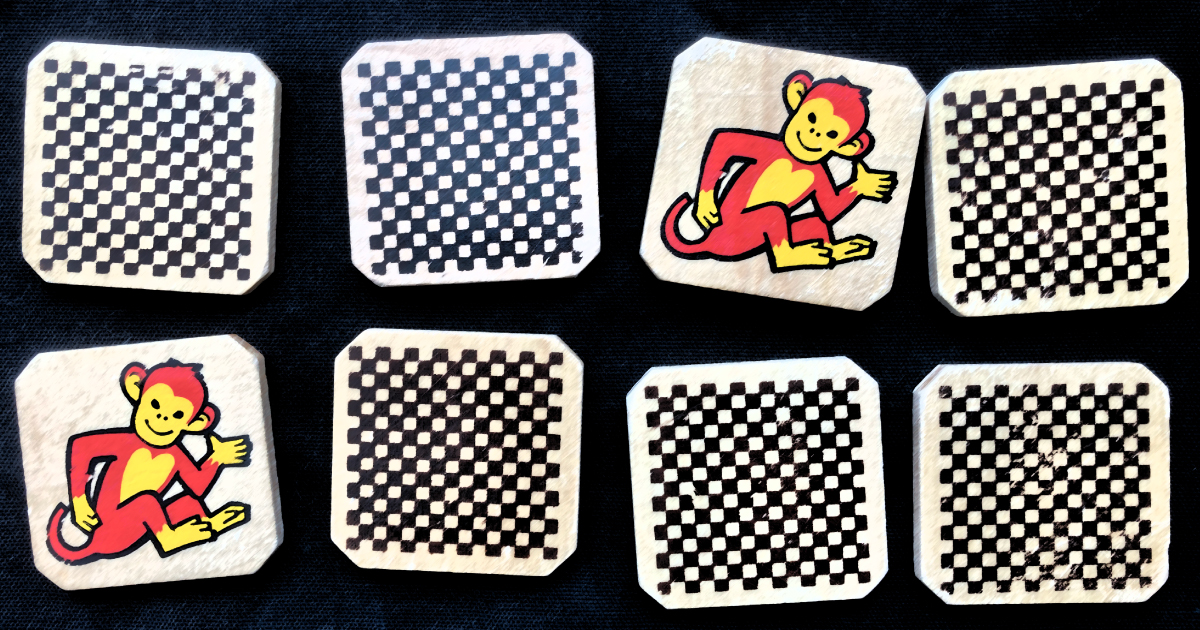
Did you enjoy playing the game Memory as a child? You can now play the game with music instead of pictures! Say hello to the TuneTwins

Researchers from the Music Cognition Group at the University of Amsterdam developed this game to answer important scientific questions about our perception and memory of music. 

In TuneTwins, you are challenged to match identical or similar tune pairs. These are taken from the 100 most popular TV themes according to IMDB and The Rolling Stone!

Each game would only take a few minutes and you are welcome to play it as many times as you want. The more you play, the more you contribute to science! 

You can find a tutorial and a link to the game here.