Showing posts with label game. Show all posts

Saturday, July 12, 2025

Want to test your musical memory?

Test your musical memory! A beta version of #TuneTwins is now online at https://tunetwins.app.

Note: Some things may still not work perfectly here and there. Please let us know via the feedback button – it helps us a lot!

Big thanks to Jiaxin, Noah, Bas, Ashley, Berit and the Music Cognition Group at large ! 

Sunday, December 31, 2023

Feel like a musical memory challenge?

[Blog by Jiaxin Li on TeleTunes]

Think about your favorite TV show. Can you hear the theme music already starting to play in your mind? Maybe it’s the epic sounding strings from Game of Thrones or the punchy synthesizer from Seinfeld? You’ve probably heard the music from that show so many times it’s now encrypted in your memory. As music cognition researchers, we are eager to find out what makes some TV tunes more memorable than the others.

The TeleTunes game is designed for exactly this reason. It is a game that allows us to study the catchiness of TV themes. Unlike the Christmas or Eurovision versions of our Hooked-on Music game series, this game invites you to test your memory with clips from the most iconic TV themes, curated from IMDB’s 100 most watched shows and The Rolling Stone’s esteemed “Greatest” TV show lists spanning the past 40 years. Your challenge? If you recognise a tune, quickly click the button, sing along in your mind and judge whether after a few seconds it continues in the right spot.

Through engaging in this game, you are contributing to music science, enriching our understanding of musical memory. By investigating the familiarity of these TV tunes, we are building a corpus consisting of well-known music. In the near future, we will use the results for yet another game – TuneTwins – continuing our quest to investigate questions like “what makes music memorable” or even “how do we as human beings remember music”.

We hope you will enjoy this game. Each game takes only a few minutes, and you can play it as many times as you like. Listen carefully! The fewer mistake you make, the more points you’ll earn! Finally, feel free to share the link with your friends and family and see who can get the highest score. The more you play, the more you contribute to science! 

TeleTunes can be found at: https://app.amsterdammusiclab.nl/teletunes.

Wednesday, July 05, 2023

Did you enjoy playing the game Memory?

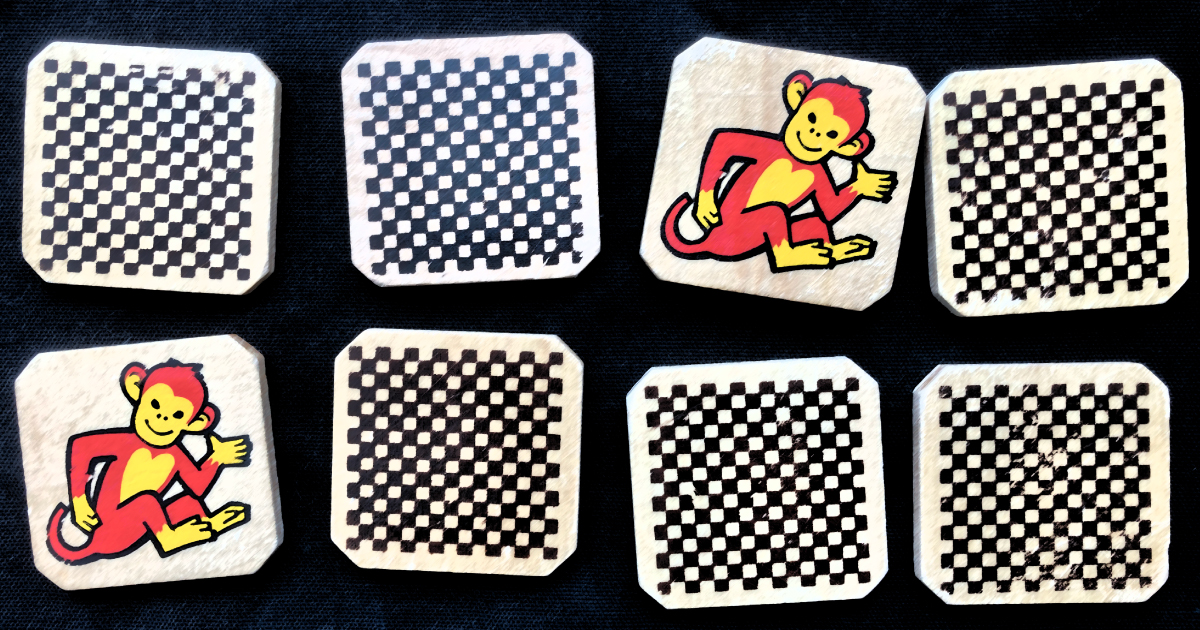
Did you enjoy playing the game Memory as a child? You can now play the game with music instead of pictures! Say hello to the TuneTwins

Researchers from the Music Cognition Group at the University of Amsterdam developed this game to answer important scientific questions about our perception and memory of music. 

In TuneTwins, you are challenged to match identical or similar tune pairs. These are taken from the 100 most popular TV themes according to IMDB and The Rolling Stone!

Each game would only take a few minutes and you are welcome to play it as many times as you want. The more you play, the more you contribute to science! 

You can find a tutorial and a link to the game here.

Thursday, December 01, 2022

Wil je ontdekken hoe het zit met je absoluut en relatief gehoor? [Dutch]

Kun jij horen welke versie van de intro van Wie de mol? of The Walking Dead de juiste toonhoogte heeft? En lukt het je om van een superkort fragment de titel en artiest van een nummer herkennen? Ontdek hoe het zit met je absoluut en relatief gehoor, je gevoel voor ritme en timing, en je geheugen voor muziek. Je bent waarschijnlijk muzikaler dan je denkt. Speel de mini-games op ToontjeHoger en leer tegelijkertijd meer over muzikaliteit. 

ToontjeHoger is ontwikkeld door de muziekcognitiegroep van de Universiteit van Amsterdam. Speel de minigames hier.

Wednesday, May 05, 2021

Unravelling the capacity for music?

We just heard that our research proposal "Unravelling our capacity for music" was granted by NWO SSH in the 2020 Open Competition!

In this  research project we will try to identify which set of music cognitive traits gives rise to our ability to perceive and appreciate music. We will approach musicality as a multicomponent phenomenon, aiming to decompose the capacity for music into its constituent components. The focus will be on melody and rhythm cognition, with special attention to their interaction with timbre. 

The research will result in a ‘phenomics of musicality’, providing a robust and relatively unbiased way of identifying the human capacity for music. Overall, the project serves as an important first step in a larger research programme, that has the aspiration to lay a new, interdisciplinary foundation for the study of musicality. 

See for more information about the research here.

Gingras, B., Honing, H., Peretz, I., Trainor, L. J., & Fisher, S. E. (2015). Defining the biological bases of individual differences in musicality. Philosophical Transactions of the Royal Society of London B: Biological Sciences, 370(1664), 20140092. https://doi.org/10.1098/rstb.2014.0092

Honing, H., ten Cate, C., Peretz, I., & Trehub, S. E. (2015). Without it no music: cognition, biology and evolution of musicality. Philosophical Transactions of the Royal Society of London B: Biological Sciences, 370(1664), 20140088. https://doi.org/10.1098/rstb.2014.0088

Thursday, October 09, 2014

Can you do better?

When I played the #HookedOnMusic game the other day, I recognized 10 songs (from the nineties) and scored 90 points. Most of you must be able to do better :-)

Play the game here.

Tuesday, December 10, 2013

Do you know this song?

What makes music catchy? Why do some pieces of music come right back to you even if you haven’t heard them in years, while you forget others almost immediately? Hooked! is designed by researchers of University of Amsterdam and Utrecht University to answer these questions (Burgoyne et al., 2013). The game tests how quickly different parts of a song trigger your memory, and with data from thousands of players, the researchers will be able to see what the catchiest hooks of all time have been and what they have in common. The more you play, the more you contribute to science!

A free version of Hooked! can now be downloaded at iTunes.
More information of the research can be found here.
More information on the game can be found here.

ResearchBlogging.orgJ.A. Burgoyne et al. (2013). Hooked: A game for discovering what makes music catchy. Proceedings ISMIR.